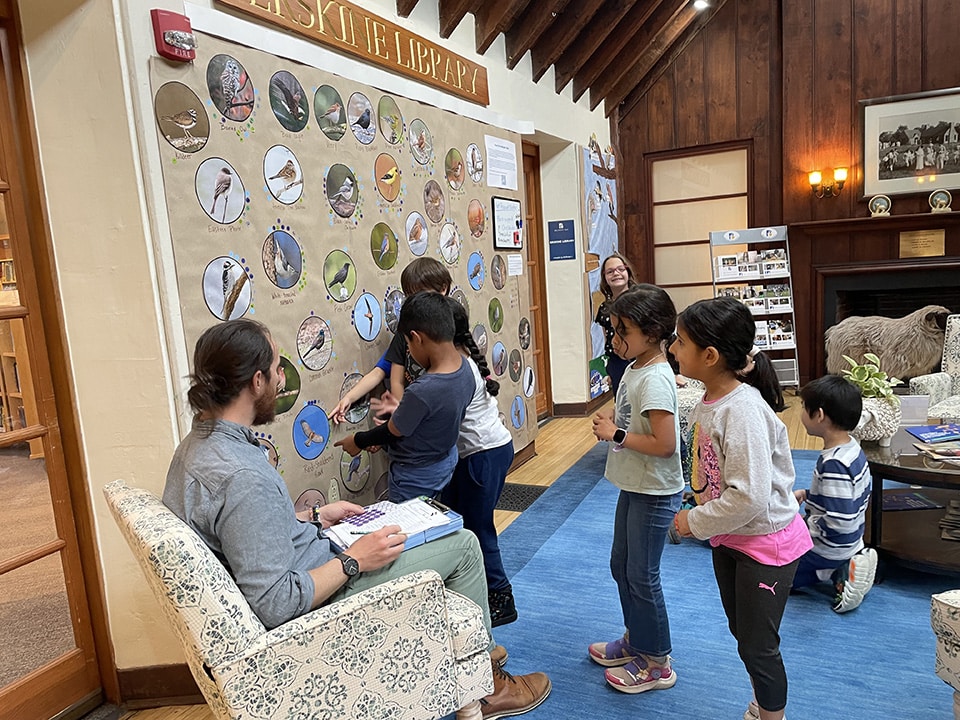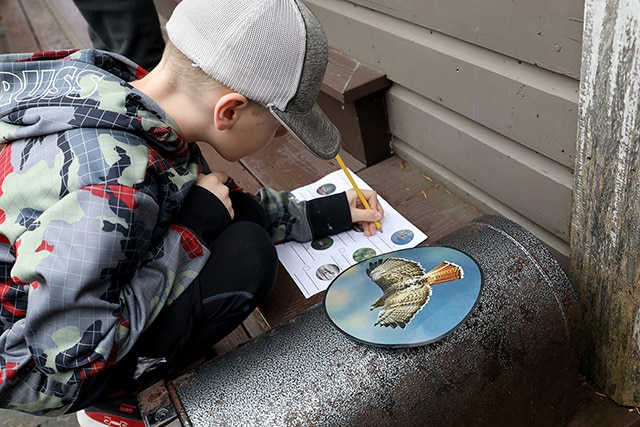
Chicka-dee-dee-dee! Local birds are beginning to migrate back to the Gallery as year three of our school-wide birding project gets underway. Students throughout the school will help us to collect and visualize data representing bird calls detected by our Haikubox, helping us all to learn more about the nature around us, how nature and technology can interact, and the limitations of technology and artificial intelligence in this context. And, of course, it helps us all to build a good deal of excitement about birding! If you’d like to join in at home, here are a few tips and resources for getting started.
- Pick an Observation Spot: Choose one place outside, your backyard, a park bench, a nature path, or even a big window (we love birding through the windows of the Barn Conference Room)!
- Listen First: Many birds are heard before they’re seen. Try closing your eyes and tuning into the sounds. How many different calls can you notice?
- Bring a Notebook: Draw, list, or describe what you see and hear.
- Use a Field Guide (or App): Tools like the Merlin Bird ID app can help identify birds by sight and sound. It’s like having a bird expert in your pocket. Or bring a guidebook like the Sibley Guide to Birds.
- Participate in Global Big Day: On May 9, be a community scientist and report your bird observations to eBird! Your observations will help scientists better understand global bird populations–even 5 minutes of birding can help!
- Keep Track of the Birds at BDS: Our Haikubox data is live and can be viewed here if you’d like to follow along at home!
In the words of the Massachusetts Young Birding Club, “If you’re interested in birds and want to go out and look for them, congratulations: you’re a birder!” So have fun out there, BDS Birders!
– The Innovation Team (Annie Fuerst, Amy Sprung, and Brit Conroy)