

If, like me, you spent any of your time over February break watching the Winter Olympic Games, then you were no doubt inspired by both the extraordinary athleticism on display and the incredible stories of each athlete’s journey to the Games. Fair warning, I am a bit of an Olympic nut. My first sports memory was watching the U.S. men’s hockey team, the ‘Miracle on Ice,’ beat the Soviet Union for gold in 1980. I’ve been hooked on the Winter Olympics ever since.
Seeing huge stars like Lindsey Vonn, Mikaela Shiffrin, Ilia Malinen, and Eileen Gu fight injury, or age, or expectations will always be compelling and fascinating to me. So too is seeing team players working together beautifully in speed skating, hockey, and bobsled, and being introduced to different sports and events like curling or biathlon. I watch and love it all!
Out of all the amazing stories, the one I found most compelling in 2026 was that of Norwegian cross-country skier Johannes Klaebo and Norway’s continued dominance of the Winter Olympics. Klaebo is now one of the most decorated winter Olympians in history. The more I learned about Klaebo, the more I came to realize that his amazing success is a byproduct of his nation’s success at winter sports. Norway regularly finds itself atop the ‘medal count’ every Winter Olympic Games, and this year’s games were no exception; a fact made more remarkable by the nation’s size–just 5.6 million people, or approximately the same population as the state of Colorado.
When asked how Norway continues to dominate the Winter Games, its representatives attribute it to a philosophy outlined in an eight-page document called “Children’s Rights in Sport”. Here are a few key tenets from the document:
- Children have the right to participate in a safe and secure environment.
- Friendship and fun come first.
- Children have as much right to choose and help plan their activities as their parents and coaches.
- Trying lots of sports early is more important than mastering one sport.
- Every child has the right to participate, even if they can’t afford it financially.
- There are no scores, rankings, or winners until age 11.
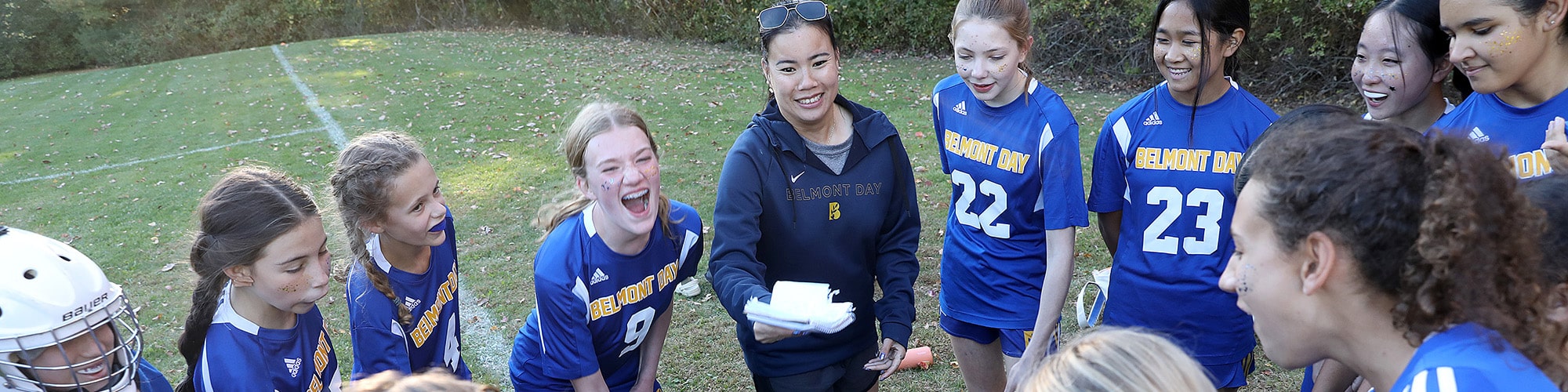
Ultimately, Norway calls this approach the Joy of Sport, and it consistently produces many of the best Nordic athletes in the world. Norway’s joy of sport also echoes many of the values we promote here at Belmont Day through our physical education and athletics programs. For anyone who was able to join our Fifth Grade Fitness Night this week, you would have seen the joy of sport in action for students and families alike.
It also reminds me of David Epstein’s 2019 book, Range: Why Generalists Triumph in a Specialized World. In Range, Epstein explores the different paths people take to arrive at the place as leaders. Notably, (and keeping the focus on the joy of sport), his first chapter compares the paths of Tiger Woods, who had a golf club in his hands at the early age of four, and Roger Federer, who didn’t begin playing tennis until his teenage years. Both, of course, went on to become one of the all-time greats in their sports. At Belmont Day, where choice plays such an important role in our athletics program, and exposure to different sports in each season through our PE program calls to mind the paths of these Olympic and all-time greats.
That their stories are rooted in joy, discovery, and excellence makes me wonder if one of our pre-kindergartners learning to ride a bike in the Downing or a fifth grade ‘personal trainer’ setting up and participating in their own circuits on Fitness Night, might just be the next Olympic champion. More importantly, though, it leaves me knowing that Belmont Day honors the Joy of Sport.
