
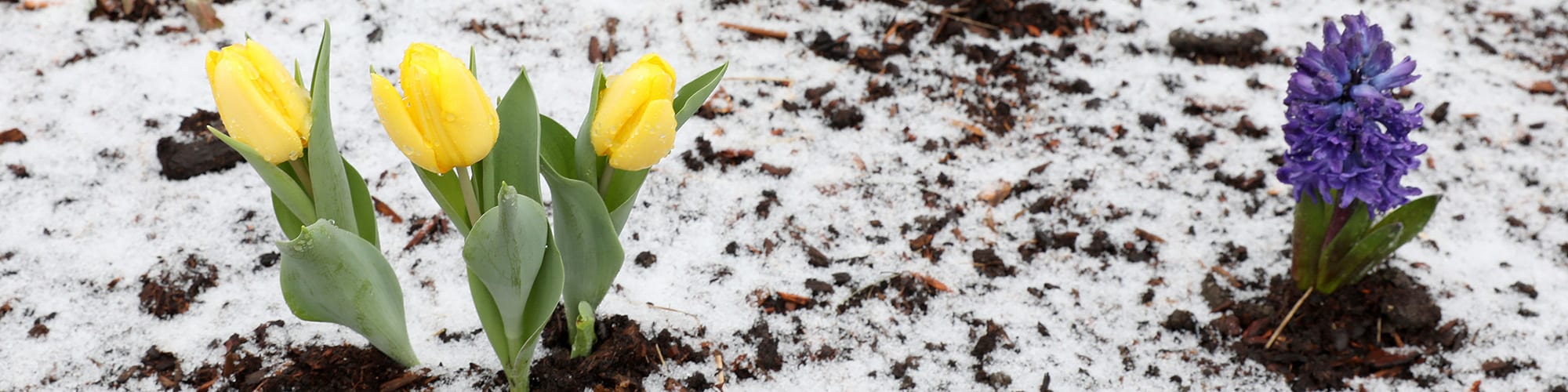

During my morning greeting duty this week, a first-grader and I were chatting as she walked into school. On her way in, she was looking at the beautiful yellow tulips that were planted recently near the front entrance to the Schoolhouse. She carefully brushed away the light snow that covered them. To “help them live,” as she described it. Now that the snow has completely melted from our campus, and we’ve passed the vernal equinox to officially welcome spring, I can feel the tide turning to the last stretch of the school year. I see this change in our students and in how much they have grown since the fall when they walked in that same front entrance on the first day of school.
While they may be taller than they were seven months ago, students’ growth since the fall is most prominent in their developing sense of agency. I love the word “agency” because it comes from the Latin word “ago, agere”, which literally means “to do, or to drive.” Beyond the word “agency,” it’s also where we get words like “agenda”, our “to-do” list, or “act,” literally “to do.” Like the spring flowers driving up through the soil this time of year, our students are busy practicing their agency all around us.
In the fall, as students get used to their new grade-level communities, routines, and spaces, they often take their cues from their environment and adults. And as the year rolls along, they learn where they can make an impact by leading and enacting. For some students, this may be doing the lights, sound, or makeup for the grades 7 and 8 spring play, while for others it is insisting that their voice and message be heard at the eighth-grade poetry slam. And for others still, it may be going for that critical pass on the field or choosing one’s own project topic and presenting it proudly at the STEAM Expo. Or it may be learning to manage their resource period well, stepping up to the board in math class to demonstrate their process to solve a problem, or running their Capstone mentor meeting every week.
A culminating example of student agency is happening right now, when middle school students lead their spring parent conferences. Students spend a couple of weeks in advance of the conferences working with their advisors to reflect on and prepare what they will share with their parents. They pore over their own recent academic, arts, and athletics reports and work to identify the strengths, challenges, and highlights of their experiences in each of their classes and activities at school. They reflect on how and when they seek out help from teachers, push themselves to face challenges, and identify areas of confidence and growth. The students also identify areas they hope to improve during the remainder of the year, and they name what they are looking forward to in the months and years ahead of them at school. After all that reflection and preparation, each middle school student runs their own parent conference, sharing with their families the gift of the insights into their growth that they don’t always openly talk about at home. Their young adult side shows up in full force, and they learn the pleasure of being the one “to do” the conference and lead the discussion.
As Robert Frost says in his poem, Mowing, “The fact is the sweetest dream that labor knows.” Simply put, the process of doing something–good and honest work–is its own reward.
Congratulations to all of our young students who are spending this spring finding their agency and “power to do”!
