
A year ago, as I began to anticipate my arrival at Belmont Day, a community member said, “Wait until early spring here–you’ll get to hear our students speak with such confidence about the work they’ve done all year!” In recent weeks, I found myself recalling that statement through a series of events and moments at the school.
What does it mean to discover and express one’s voice? In kindergarten, it can involve asking to read alongside a teacher during rest and read time, sounding out the letters and words together. Or, a trip with one’s observation journal, looking for daffodils that have taken root in the late winter soil, and noting the conditions that have led to another few weeks of winter. For our eighth graders, it starts with a question during an interview with an expert for Capstone, or imagining oneself standing and speaking in front of an audience. All told, voice has many dimensions–soft and loud, authentic and true, written and spoken, and often, the result of regular opportunities to practice as well as the insistence of one’s ideas being heard.
Recently, I have noted the intersection of voice and confidence in the following ways:
- Taking the lead: At the fifth grade fitness night, students led their parents and guardians through a series of circuits, taking the lead, encouraging progress, and moving from one station to the next.
- Sharing ideas and research: A week later, the STEAM Expo filled the Barn gym with many voices, all focused on the role of water and the atmosphere in the sixth and seventh grade students’ research and experiments. Whether it was saving turtles from getting caught in fishermen’s nets or exploring the role of atmospheric pressure for astronauts, students homed in and focused their voices on the topic at hand after studying its many dimensions.
- Speaking one’s truth: In early March, eighth grade English teacher Emily Phan invited faculty to attend the annual Belmont Day School Poetry Slam during her classes. From the student’s first words, the emotions expressed were raw and true. To speak one’s truth in front of adults, let alone one’s peers, is the epitome of courage and voice.
- Turning down the volume: During green room supervision duty at the grades 7 & 8 play in early March, I noted the ways in which the two stage managers communicated with peers through tiny headsets and non-verbal cues. From giving students their stage cues to honoring the direction from Susan Dempsey and Chris Parsons, they held the space with just a whisper.
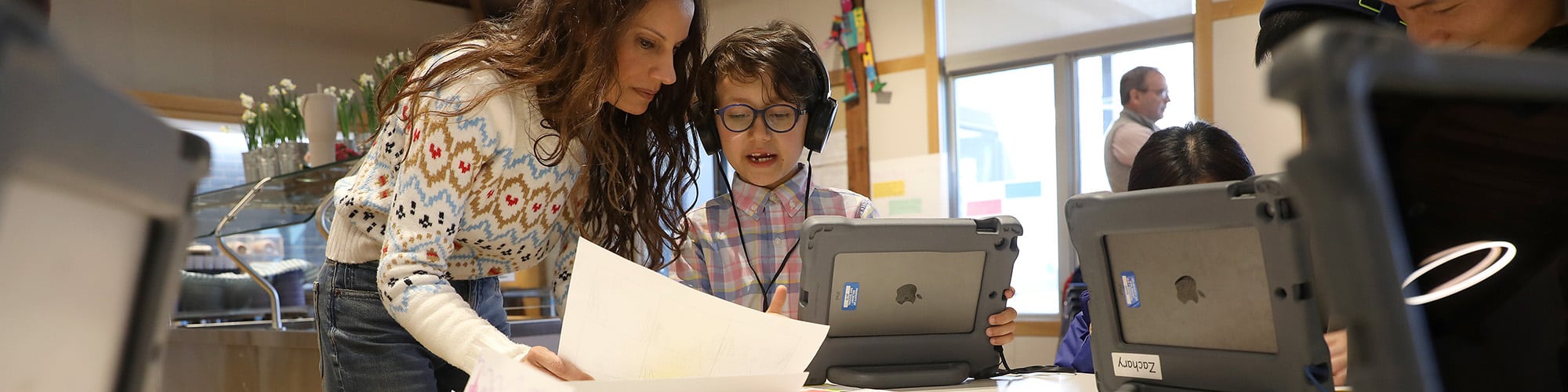
- Practice as process: At the poetry showcase last week, the first graders shared their poetry and Scratch projects after many weeks of composing and putting forth their ideas. Rehearsing in the library with faculty beforehand, the students had the chance to reflect upon and plan for their moment. Voice involves preparation, too.
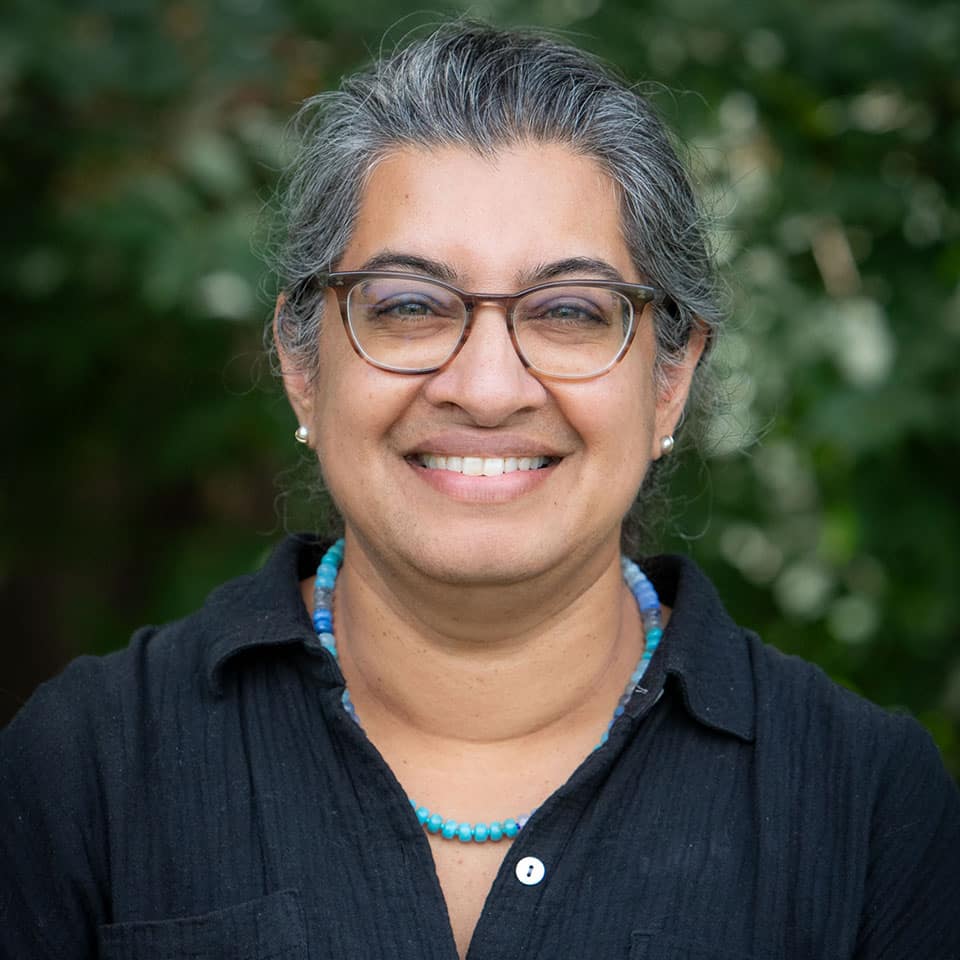
- The interplay of voices: Finally, during my presentation about my own South Indian culture with the fifth grade language class, the students asked questions that they had researched with care. I saw the ways in which my readiness to answer them–an expression of identity and voice that has been emerging over decades–led to more questions and conversation.
Our job as educators is to create the spaces where voices can emerge, shift, grow, and take shape. Trying out one’s voice in a safe space is critical to its emergence. Diversity of thought and expression is at the core of our mission, and the many opportunities to practice, hear, iterate, and perform in turn allow each voice to develop. Both at Belmont Day and in the wider world, finding and using one’s voice is an essential skill, and we are engaged in its development each day.
