Mural Helps Set the Scene in Fourth Grade
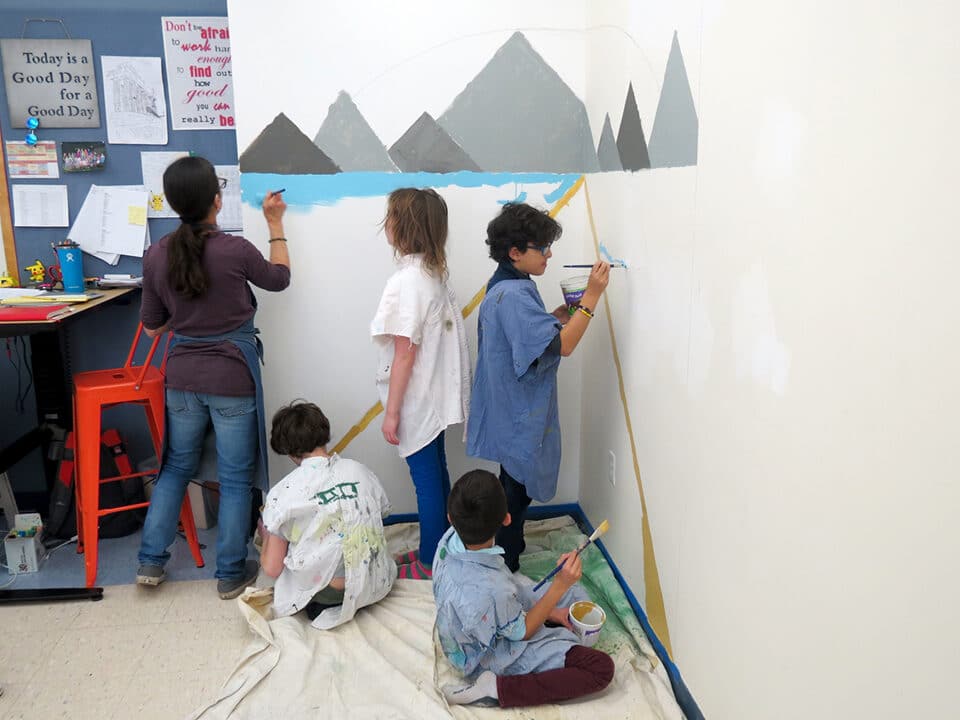
Fourth grade is creating a mural in their classroom, a collaboration between the art teacher and social studies teacher. Earlier this year, the students were given the challenge to create a design for a backdrop for the storytelling corner that is set up in their classroom year-round. The storytelling traditions of Ancient Egypt and Ancient Greece, and creative writing are all part of the fourth grade curriculum.
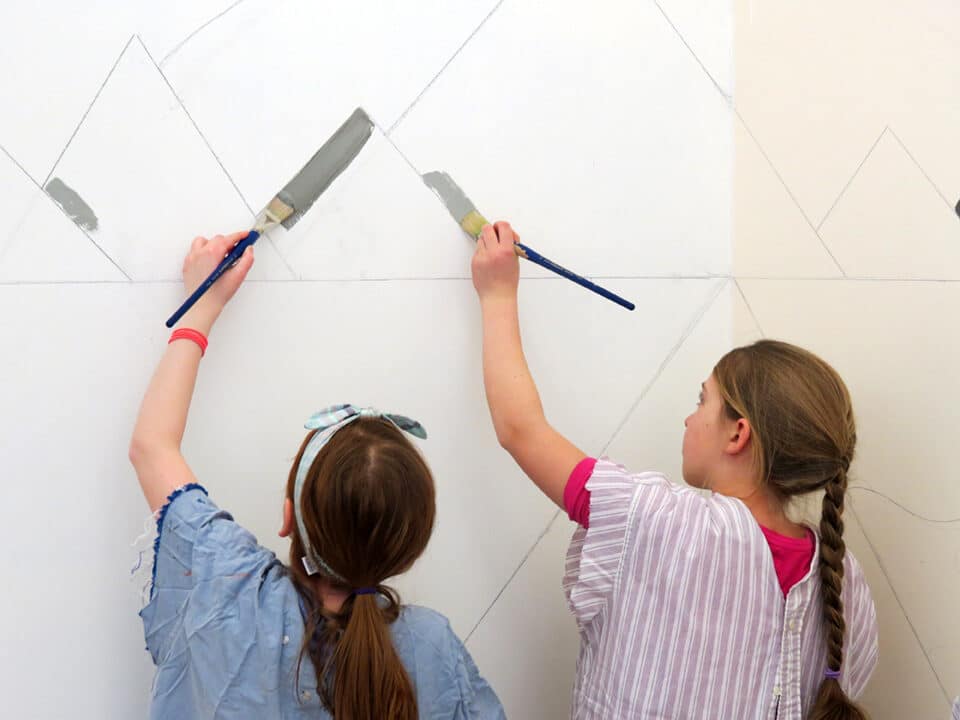
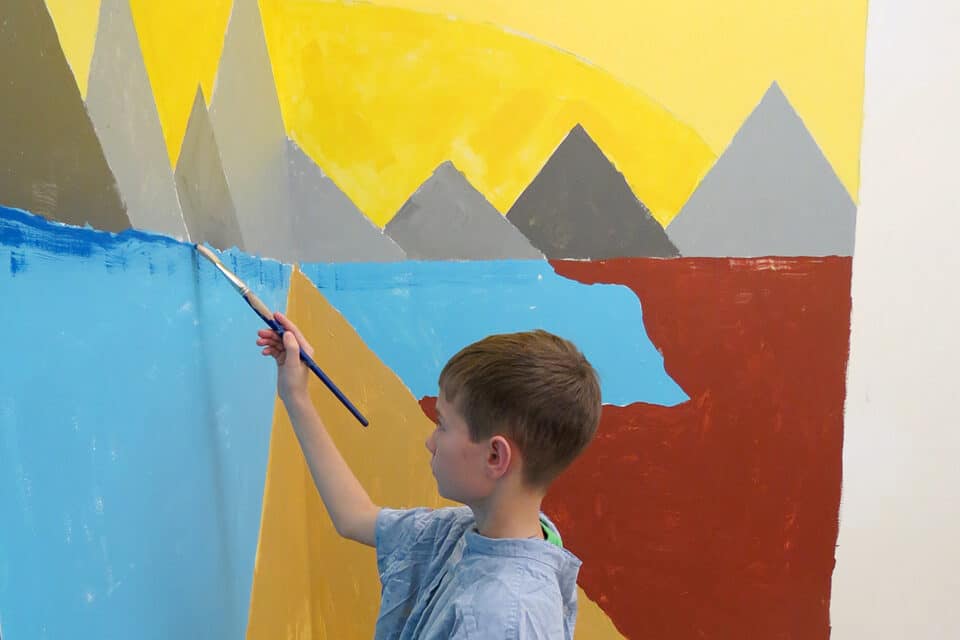
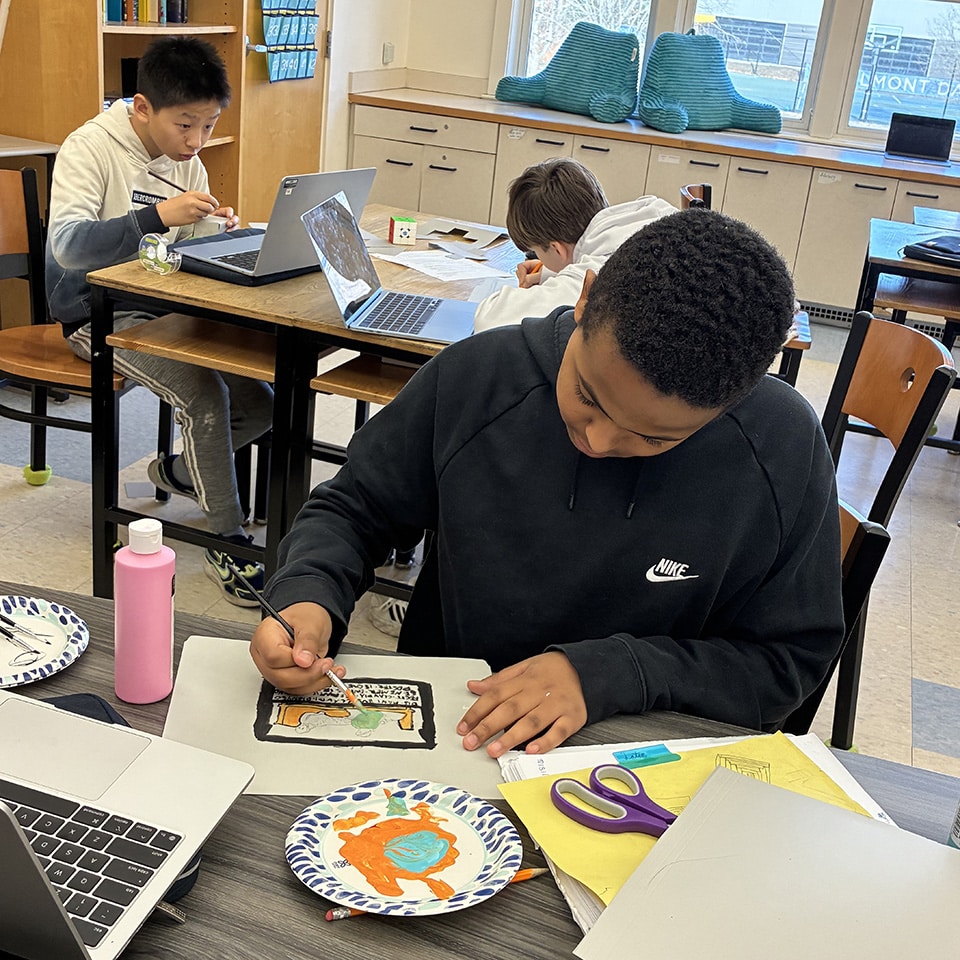
Given the range of stories that may be told in this area, students were asked to consider a design idea that was timeless, open-ended, and could serve as a background for any story. The classroom mural is a combination of ideas presented by the fourth grade students. Using latex paint, students first created a base coat in each area of the design. Next, they applied details and textures using various techniques using brushes, crumpled paper, and cloth.
The storytelling stage will be one of three stages highlighted at the Greek Festival in April. In May and June, students will have opportunities to tell their own stories through a new, Moth-inspired storytelling unit.