This week, seventh grade science launched our year-long inquiry into water—a topic we’ll continue to explore throughout the year through the lenses of Earth science, chemistry, biology, and physics. We began with a deceptively simple question: How much water is actually available to us on Earth?
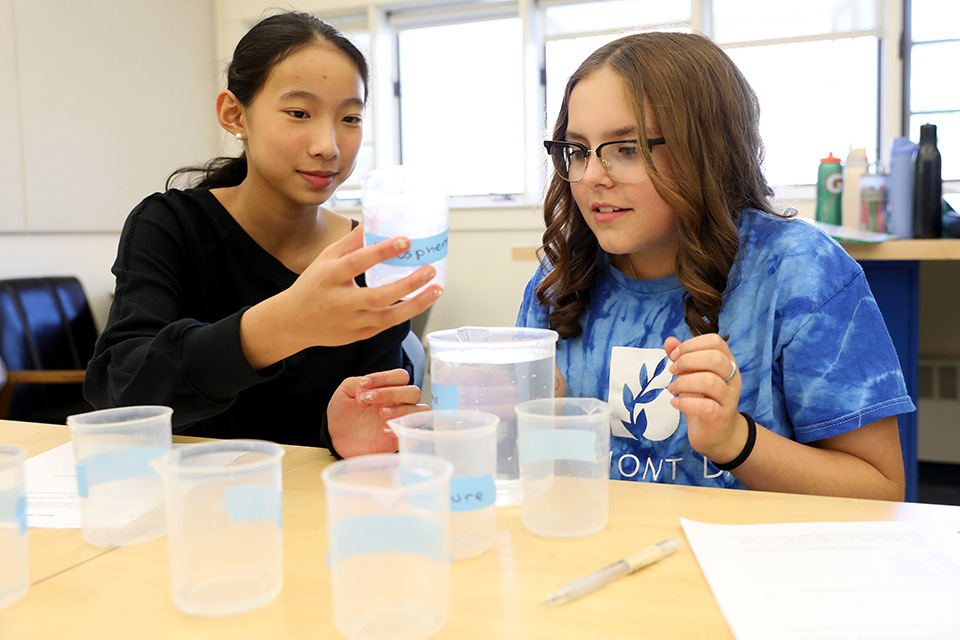
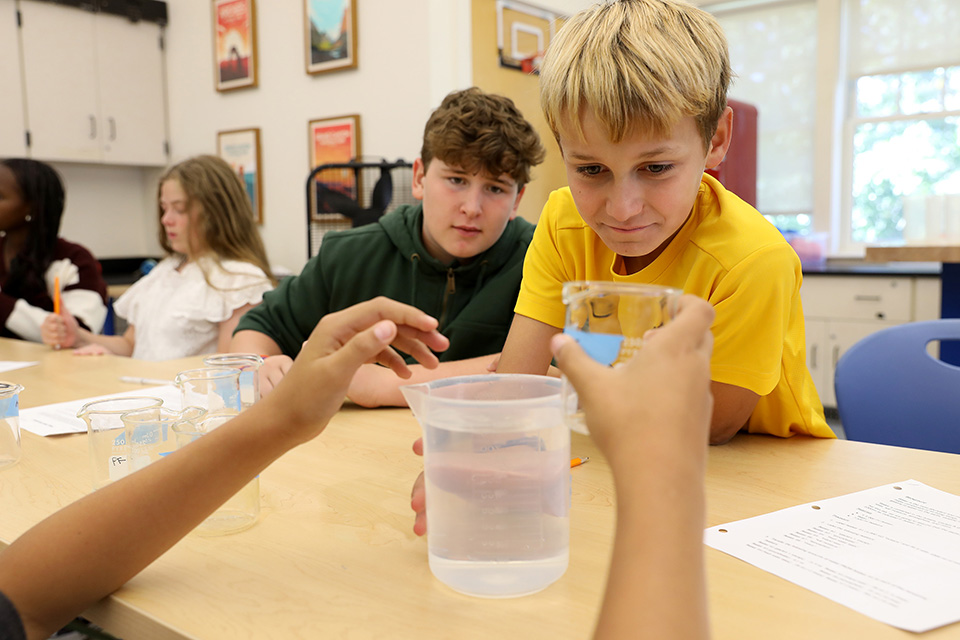
Students participated in a hands-on investigation called Water, Water Everywhere. To model all of Earth’s water, we started with 1,000 mL of water and then distributed it among beakers representing the oceans, glaciers and ice caps, groundwater, freshwater lakes, inland seas, soil moisture, the atmosphere, and rivers. As students carefully measured each amount, they quickly discovered that the distribution of water on Earth is anything but equal.
The activity also gave us an opportunity to practice an important scientific skill: distinguishing observation from inference. Students recorded what they could directly observe in the beakers and then used that evidence to make inferences about how much water is actually accessible to humans and other living things. The tiny amounts representing rivers, lakes, and atmospheric water made for some particularly striking observations!
This investigation is just the beginning. Throughout the year, we will return to water again and again, asking questions about how it moves through Earth’s systems, how humans use and impact it, and what happens when we look at water at the molecular and cellular levels. We’ll investigate the water cycle, water resources and human impacts, acids and bases, and eventually explore how water connects to living systems and physical phenomena.
Our goal is not simply to learn facts about water, but to think like scientists—asking questions, making observations, using evidence, and building explanations about the world around us.
– Maggie Small, seventh grade science teacher