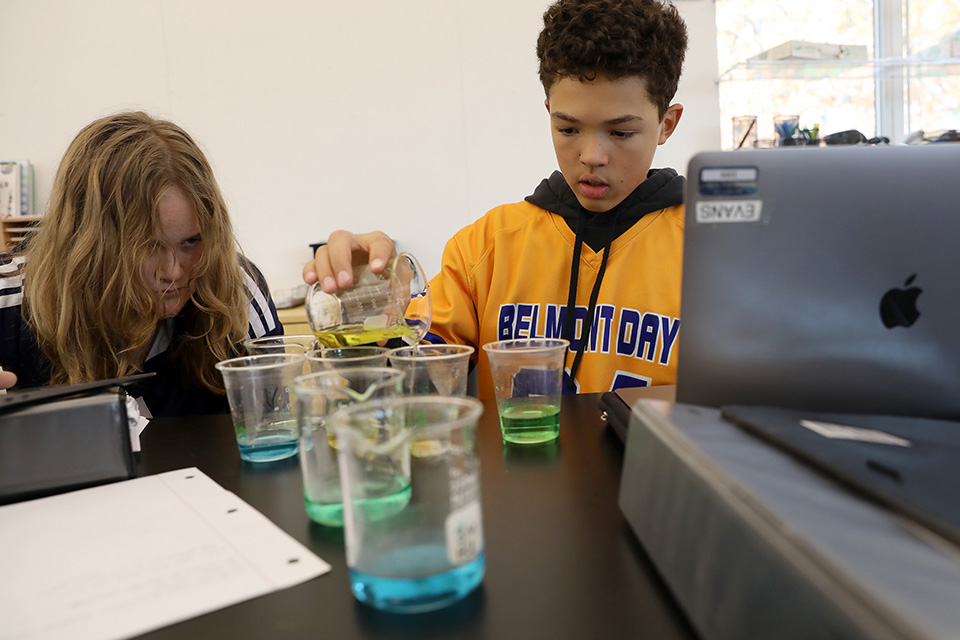
To begin exploring the applications of genetic concepts in humans, eighth grade students completed an inquiry activity to understand how human blood donations work. Using water with food coloring to represent different blood types, students conducted blood transfusions between a donor and a recipient to determine which blood types could be donated without causing agglutination. The information gathered served as a gateway for further class discussions about the definitions of antigens and antibodies and how the presence of these structures on red blood cells or in blood plasma determines blood donation compatibility. Students also discussed the concept of the Rh factor and its impact on both blood donation and pregnancy. As a culminating activity, students will have the opportunity to test their own blood to determine their blood type and compare their results to the distribution of blood types in the world population.
– Sandra Trentowsky, eighth grade science teacher